

Air Conditioning 20 Degree Rule

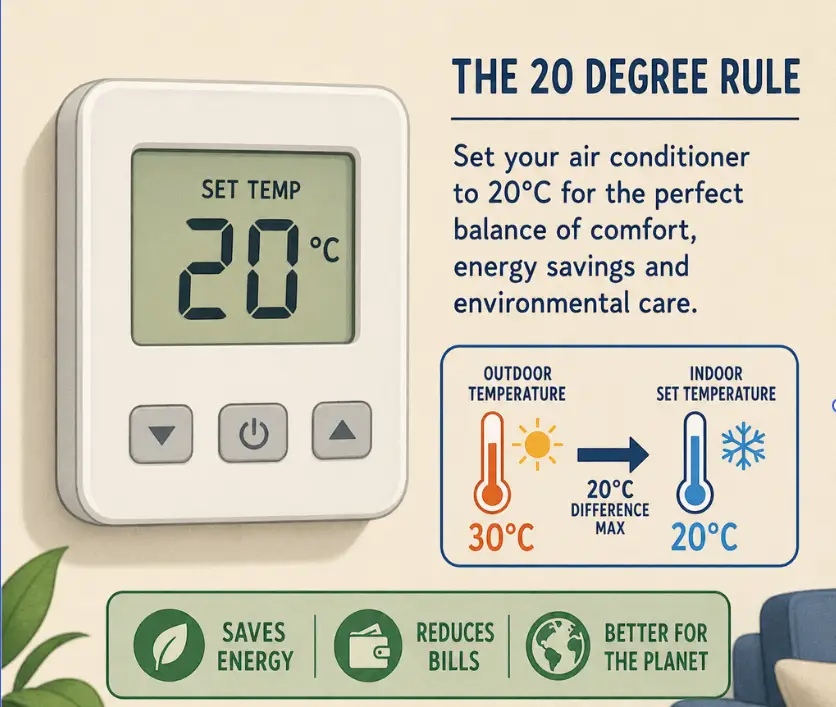
Air conditioning is a modern comfort many of us rely on. But how can we use it efficiently? The a/c 20 degree rule offers a simple guideline, sometimes described as an ac temperature rule in HVAC discussions. It suggests setting your AC no more than 20 degrees cooler than the outside temperature. This rule helps prevent overworking your unit and saves energy, making it a practical energy saving ac approach.
Understanding this rule—and a few complementary air conditioning tips—can lead to significant savings on your energy bills. It also extends the lifespan of your air conditioning system. By following this rule, you can enjoy a comfortable home without excessive energy use.
In this guide, we’ll explore the benefits of the 20 degree rule (sometimes called the ac temperature rule). We’ll also provide air conditioning tips and energy-saving strategies. Whether you’re a homeowner or renter, these insights can help you optimize your AC usage.
What Is the A/C 20 Degree Rule?
The a/c 20 degree rule is a guideline for setting your air conditioner’s temperature. It suggests keeping the indoor temperature no more than 20 degrees cooler than the outside. This simple practice helps balance comfort with energy efficiency. As an ac temperature rule, it supports energy saving ac goals.
When outdoor temperatures soar, it’s tempting to crank the AC. However, following this rule can prevent your system from overexerting itself. Overworking an air conditioner can lead to higher energy bills and increased wear and tear.
Consider this: if it’s 90°F outside, aim to set your AC no lower than 70°F. Such a setting not only maintains comfort but also keeps energy use in check.
Here are the key benefits of this rule:
- Reduces energy consumption
- Extends the lifespan of your AC unit
- Enhances comfort and energy management
Adapting the rule may be necessary depending on various factors like humidity and personal preferences.

Understanding and applying this rule is an easy yet effective step toward a more efficient home. It’s an initial move towards mindful air conditioning usage and energy saving ac.
Why the 20 Degree Rule Matters for Your AC
The 20 degree rule plays a crucial role in maintaining your air conditioning system’s health. As an ac temperature rule, it helps in preventing unnecessary strain on the unit. By following this rule, you ensure that your AC doesn’t work harder than necessary, which can lead to premature breakdowns.
Efficiency is another key reason to adhere to the rule. Air conditioners operating within these limits tend to consume less energy. This results in lower electricity bills, making it a cost-effective, energy saving ac strategy.
Implementing the rule also contributes to the longevity of the AC unit. Less strain on the system means fewer maintenance issues and extended service life. Your AC unit will thank you in the long run.
To summarize, the importance of the rule can be broken down into several benefits:
- Prevents excessive wear and tear
- Promotes energy-efficient operation
- Saves on maintenance and repair costs
By consciously applying this guideline, you make a positive impact on your utility expenses and unit lifespan, especially when paired with simple air conditioning tips.

How to Apply the 20 Degree Rule in Your Home
Applying the 20 degree rule at home is straightforward. Begin by determining the outdoor temperature. This will help you decide on the optimal indoor temperature setting that aligns with the ac temperature rule.
Next, set your thermostat to maintain a temperature no more than 20 degrees cooler than outside. This balance ensures comfort without overworking the AC unit and supports an energy saving ac setup.
In hotter climates, adjust the rule to fit personal comfort. Consider tolerating a slightly warmer environment, especially if humidity is low. It’s a practical way to reduce energy consumption.
Use ceiling fans to help circulate the cool air. This can allow you to set the thermostat at a higher temperature while still feeling cool. Moreover, ensure your home is properly insulated and windows are sealed to keep cool air inside.
For a quick checklist to implement:
- Check outside temperature
- Adjust thermostat accordingly
- Use fans to aid cooling
- Ensure proper insulation
- Seal windows and doors
By consistently following these steps, you’ll maximize the benefits of the 20 degree rule while keeping the ac temperature rule easy to follow.
Benefits of Following the 20 Degree Rule
The 20 degree rule is more than just a guideline; it offers tangible benefits. Keeping your air conditioning unit from overworking is a primary advantage. This approach prevents wear and tear, extending the lifespan of the unit.
Financial savings are another benefit. By following the rule, you can cut down on energy bills with energy saving ac habits. Each degree higher on the thermostat can save significant costs over time.
Comfort isn’t sacrificed when you follow this rule. Maintaining a steady indoor climate promotes a cozy living environment. Even during the hottest months, you can feel comfortable and relaxed.
In addition to these perks, you contribute to a broader effort in sustainability. Reducing energy usage helps lower your carbon footprint. Adopting this rule is a small yet impactful step toward environmental responsibility.
Consider these benefits at a glance:
- Prolongs AC lifespan
- Reduces energy bills
- Enhances indoor comfort
- Supports environmental sustainability
Factors That Affect the 20 Degree Rule
Several factors can impact how the 20 degree rule is applied in your home, even when you treat it as an ac temperature rule. One of the most important is humidity. High humidity levels can make it seem warmer indoors, even when the thermostat is set optimally.
The efficiency of your home’s insulation plays a significant role as well. Poorly insulated homes lose cool air quickly, making it harder to maintain the desired temperature. Sealing windows and doors is crucial to preventing air leaks.
The local climate also influences the rule’s effectiveness. In regions with mild summers, the rule may be easier to follow compared to areas with extreme heat. Personal preferences and comfort levels also come into play when setting your thermostat.
To adapt the 20 degree rule successfully, consider these factors:
- Humidity levels
- Home insulation quality
- Local climate conditions
- Personal comfort preferences
Examining these aspects can help you tailor the rule to fit your specific needs.
Air Conditioning Tips for Maximum Efficiency
Achieving air conditioning efficiency requires more than just setting the right temperature. Maintaining your AC unit is crucial. Regular maintenance, like cleaning filters and checking for leaks, can boost performance.
Using ceiling fans is another effective strategy. Fans help circulate air, allowing you to set the thermostat higher without sacrificing comfort. They use less energy and provide more savings.
Sealing your home is essential for retaining cool air. Check doors and windows for drafts and use weatherstripping as needed. This prevents air from escaping and reduces the workload on your AC.
Here are some quick tips to enhance your AC’s efficiency:
- Schedule regular maintenance
- Utilize ceiling fans
- Seal doors and windows
Additionally, using a programmable thermostat can optimize temperature settings based on your schedule. This can lead to energy savings, especially when you’re away from home. Setting the thermostat to reduce energy use during peak hours can make a significant difference.
Also, consider shading windows and using reflective blinds. These small adjustments prevent heat gain and lower cooling needs. A well-planned home environment contributes greatly to efficient cooling.
By implementing these air conditioning tips, you can maximize efficiency while keeping comfort levels high. These air conditioning tips also reinforce the a/c 20 degree rule for energy saving ac results.
Energy Saving AC Strategies Beyond the 20 Degree Rule
While the 20 degree rule offers a solid foundation for energy efficiency, there are additional energy saving ac strategies to consider. One such strategy involves upgrading to Energy Star-rated AC units. These units are designed to use less energy and can lead to significant long-term savings.
Another practical approach is leveraging smart thermostats. These devices allow more precise control over your home’s temperature and can be adjusted remotely. They offer schedules to fit your lifestyle, reducing unnecessary energy use.
Consider incorporating natural cooling methods, such as ventilation and shading. These methods reduce reliance on air conditioning by utilizing natural airflows. This can be particularly effective during cooler nights.
Here are a few methods to decrease reliance on AC:
- Upgrade to Energy Star-rated units
- Use smart thermostats for better control
- Utilize natural ventilation and shading
In addition, regular energy audits can identify areas for improvement. By understanding how your home uses energy, you can make informed adjustments. Audits help pinpoint excessive usage areas, allowing for targeted interventions.
Some more energy-saving actions to consider:
- Conduct regular energy audits
- Address excessive energy usage areas
- Consider home insulation improvements
Overall, these strategies complement the 20 degree rule, enhancing efficiency and sustainability. These energy saving ac practices provide a multifaceted approach to manage energy consumption effectively.
Common Myths and Misconceptions About AC Temperature Rules
Many people believe setting the thermostat extremely low cools the house faster. However, this is a misconception. The AC unit cools at a consistent rate, regardless of the set temperature.
Another myth is that leaving the AC on all day saves energy. In reality, it wastes energy and racks up costs. It’s more efficient to set the thermostat higher when you’re away and lower only when you’re home. Use the ac temperature rule as your guide instead.
Additionally, some think ceiling fans cool rooms. Fans only circulate air, making you feel cooler, not changing room temperature. Here are some common myths debunked:
- Lowering the temperature cools faster
- Running AC constantly saves energy
- Ceiling fans lower room temperature
Frequently Asked Questions About the 20 Degree Rule
You might wonder if the 20 degree rule suits all climates. This ac temperature rule is flexible and can be adjusted for varying conditions.
Some common questions include:
- Can the rule be used in humid areas? Yes, adjust it with a dehumidifier.
- Does the rule apply year-round? It’s most effective in summer.
- Is this rule mandatory? No, it’s a guideline to optimize comfort and efficiency.
Conclusion: Making the 20 Degree Rule Work for You
Adopting the 20 degree rule can be an excellent step toward efficient cooling and energy savings in your home. Tailor this guideline to suit your local climate and personal comfort needs.
By combining the a/c 20 degree rule with other energy saving ac practices and straightforward air conditioning tips, you can achieve a comfortable and eco-friendly living environment. Remember, small adjustments can lead to significant benefits for both your wallet and the planet.
Q&A
Question: What is the A/C 20 degree rule, in simple terms?
Short answer: It’s a guideline to set your thermostat no more than 20°F cooler than the outdoor temperature. For example, if it’s 90°F outside, aim for about 70°F indoors. This balance helps keep you comfortable while reducing energy use and preventing your AC from overworking.
Question: Is the 20 degree rule mandatory, and does it work in every climate and season?
Short answer: No—it’s a flexible guideline, not a mandate. It’s most useful in summer and can be adapted to your local climate, humidity, home insulation quality, and personal comfort. In humid areas, pairing the rule with a dehumidifier can make higher setpoints feel more comfortable.
Question: How do I apply the rule at home day-to-day?
Short answer: Start by checking the outdoor temperature, then set your thermostat so the indoor target is within 20°F of that number. Use ceiling fans to feel cooler at slightly higher thermostat settings, and improve your home’s insulation while sealing windows and doors to keep cool air in. In very hot weather, consider tolerating a slightly warmer indoor temperature to avoid overworking the system.
Question: Will setting the thermostat extra low cool my home faster, or should I leave the AC on all day?
Short answer: No on both counts. Lowering the setpoint doesn’t speed up cooling—the unit cools at a consistent rate—so extreme settings just waste energy. Leaving the AC on all day also wastes energy; instead, raise the setpoint when you’re away and lower it when you’re home, using the 20 degree rule as your guide. Remember, ceiling fans don’t lower room temperature—they circulate air to make you feel cooler.
Question: What else can I do beyond the 20 degree rule to save energy?
Short answer: Complement the rule with regular AC maintenance (clean filters, check for leaks), use programmable or smart thermostats, improve insulation and seal air leaks, shade windows or use reflective blinds, and consider upgrades like Energy Star-rated units. Natural ventilation and shading can also reduce cooling needs, and an energy audit can reveal targeted improvements.